


Genealogical selection is based on two essential elements: recording phenotypes (growth, productivity, conformation, etc.) and mastering the pedigree. To assess the potential of each individual, it is essential to know its genetic origins and performance. The best performers are then kept to renew the stock and thus improve the general population.
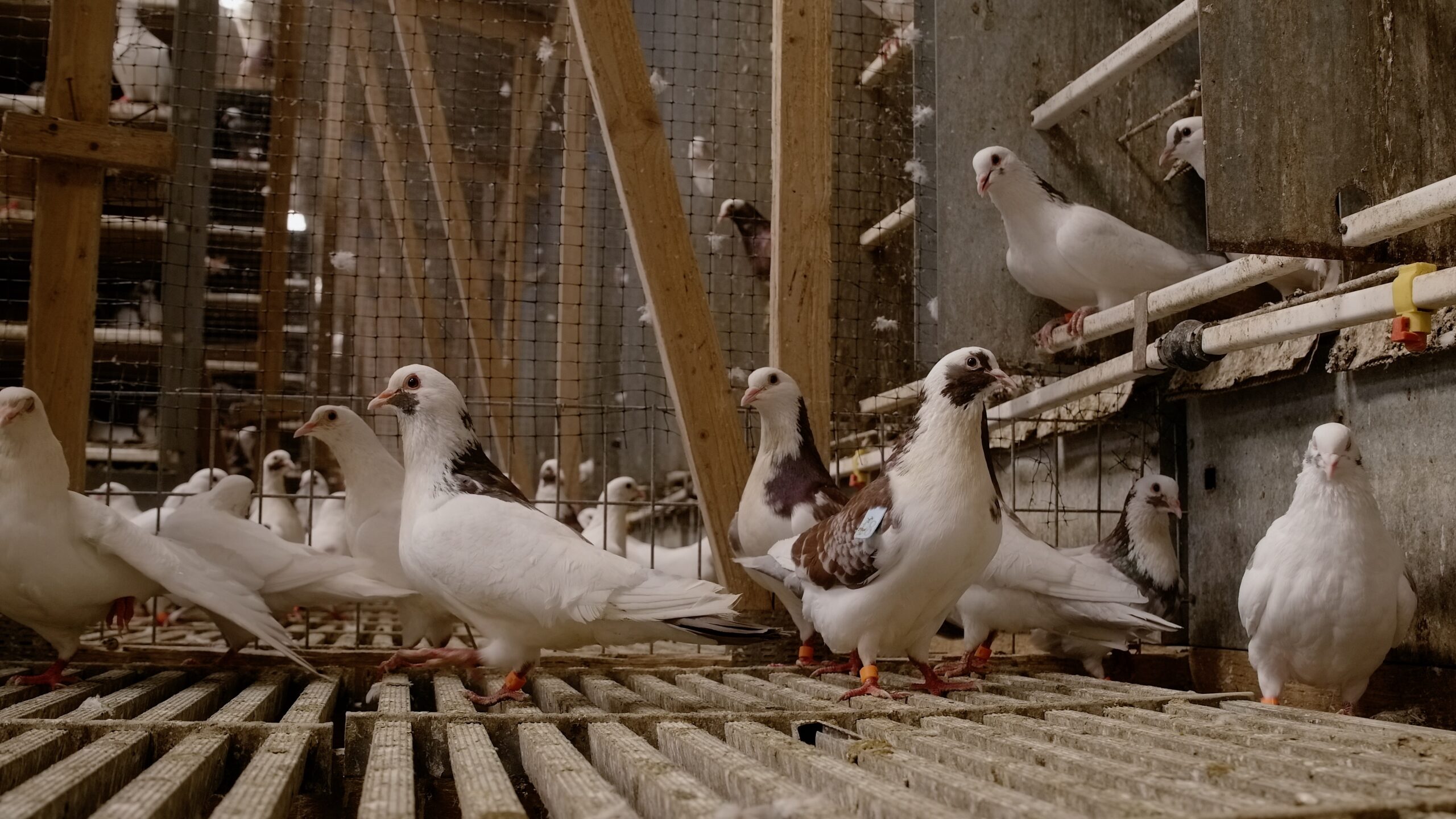
To achieve this, it is necessary to think at the individual level and ensure perfect traceability. This task is made complex by the fact that pigeons live in collective aviaries. While this lifestyle allows them to express their native behaviours, it poses a challenge in determining the genealogical tree linking the different members of a selection population.
Pedigree control
Unlike other poultry species, pigeons are not inseminated, which would make the paternal origin known with certainty. There is also no egg control to identify the breeding female.
In pigeon aviaries, pedigree control relies primarily on the expertise and observation of Europigeon animal keepers. When a new flock is formed, an equal number of males and females are introduced into the aviary, as pigeons are a monogamous species. The animals will evolve in this new environment to form pairs, expressing their sexual and courtship behaviours. Straw and numbered nests are available to encourage them to settle in while ensuring their well-being.
Although they have the opportunity to interact with each other, pairs will gradually form according to preference and choose their nests. The avian technician’s job is then to identify which nest is frequented by each unique male/female pair. Once the eggs have been laid, the males and females will take turns incubating them, which reinforces the identification process. In addition to their individual rings, each breeding bird will then receive a label corresponding to its nest. This is the first crucial step in ensuring pedigree control: identifying the breeding pair and its nest.
It generally takes about three months for a flock to be considered definitively established, with clearly established pairs.
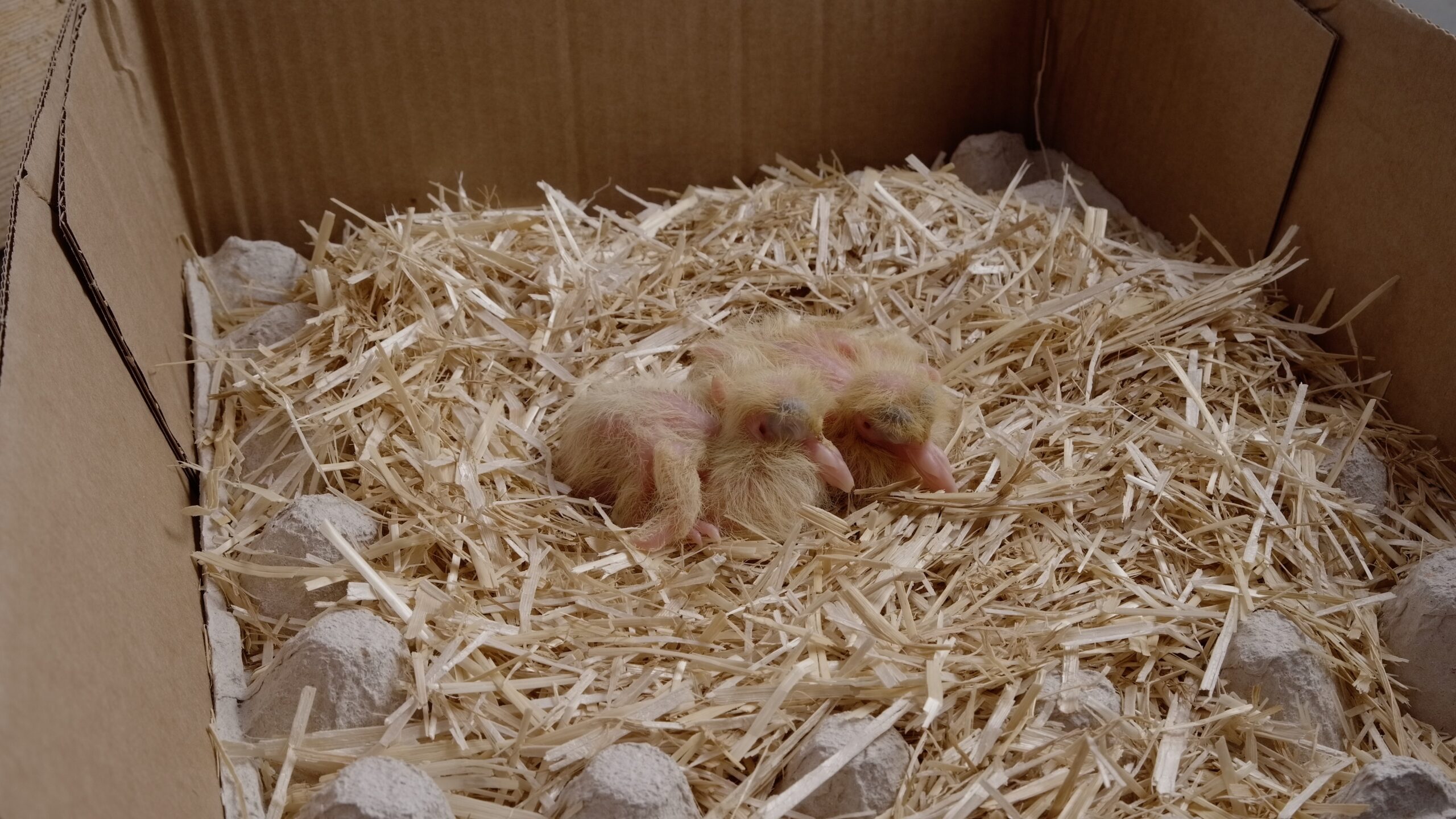
The second stage takes place during egg laying and hatching. Pigeons do not use incubators. The eggs are incubated by their own parents in their nest. Pigeons are a altricial species, meaning that the young are unable to feed and move on their own at birth. So when the squab hatches, it remains in its original nest until it is weaned at around 28 days. This allows animal keepers to record the new hatchlings on a dedicated app and assign an individual ring to each newly hatched animal. We then know who its parents are, i.e. the breeding birds that laid and incubated the eggs in this nest and will then feed the young until they are able to feed themselves at one month old.
Inbreeding management
While selection can improve traits, one of the major challenges is maintaining genetic diversity. Increased inbreeding could lead to genetic impoverishment and, in the worst case, the emergence of genetic defects. One strategy is to select improved animals that are not closely related genetically and to optimise mating between them.
In pigeons, another special feature is the absence of directed mating. In other words, the geneticist cannot choose and control in advance which male will mate with which female.
Thus, when selecting birds to renew a flock, the use of full brothers or full sisters is severely limited in order to maintain good family variability.
A system validated by field feedback…
This system for identifying each trio of parent and descendant is based on the expertise of pigeon breeding technicians. Genetic evaluation software and principles are then used in the same way as for other species. Improvements in purebred lines are then passed on to production farms through a system of successive crossbreeding specific to the pyramid structure of the poultry industry.
The selection of meat pigeons carried out in this way has proven its effectiveness, as the genetic gain for the conformation of the Mirthys Pie has increased 1.5-fold over the last ten years.

…And reinforced by genomics
DNA samples followed by genotyping were taken from both breeding animals and their offspring using the multi-species SNP chip developed as part of the IMAGE project led by Wageningen University in the Netherlands.
The principle is simple and very effective: as each breeding animal passes on half of its genetic heritage to its offspring, a pedigree can be determined on the basis of shared molecular markers; this is known as parentage assignment.
The challenge was then to compare the pedigree obtained by genotyping with the one recorded using traditional methods. The results obtained were perfectly consistent, regardless of the strain.
The expertise and know-how developed by the Europigeon team therefore enable genealogy management, even in a collective environment. This guarantees effective and sustainable genealogical selection.

